Wednesday, October 10, 2012


Tuesday, October 9, 2012
‘Animal spirits’ update
Nothing on this web site should be construed as investment advice. This is pure research and speculation. You trade at your own risk, unlike the Wall Street banks, who also trade at your risk.
Confidence stalls when things stop getting better than what we’re used to. Confidence fails when they become worse than what we’re used to. Defined solely in terms of the unemployment rate, confidence now has a one percentage point cushion between current rate (7.8 percent) and adaptation level (~8.8 percent). If the unemployment rate stabilizes and climbs a percentage point because the economy falls off some form of fiscal cliff, the actual rate will hit the adaptation level, which historically has almost always precipitated a failure of confidence and a negative jag in output and employment. The forecast is below. The remainder of the decade is likely to resemble the ‘Seventies (the 30 year inflation cycle was staggered a year by mini-depression and QE) as cost-push inflation rears its ugly head (see South Africa today) and reserves liquidity feeds into a wage price spiral.

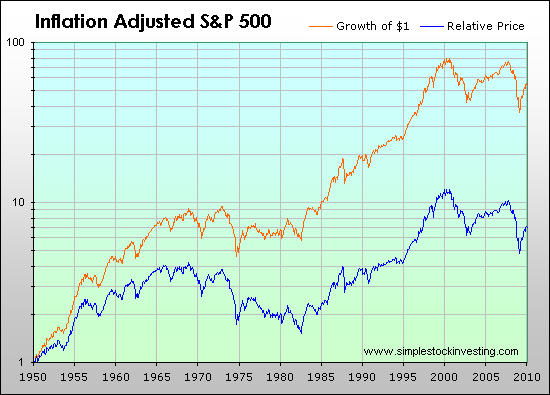
If the American stock market follows the ‘Seventies pattern, there will be a steep bear market bottoming in about first half 2014, and then a “bull market” in which total return to shares is something less than the rate of inflation.
Monday, October 8, 2012
One scion’s take on global domination
This is a trippy but entertaining, and when it comes to exposing the conspiracy for global domination, quite convincing. All it takes to motivate the conspiracy is highly concentrated ownership of capital and implacable greed among its owners, and that seems self-evident to many today. Basically libertarian with the simplism and categorical lack of faith in the ability of any government to do virtually anything right.
www.thrivemovement.com
Thursday, October 4, 2012
The signature of incipient depression
Historically, the signature of an oncoming depression consists of an unserviceable debt to GDP ratio and an aggregate demand choking level of income inequality (and wealth inequality).
The United States today resembles the US of 1929 more than that of 1941. The warmongers inside the Beltway still salivate over the miraculous drop in income inequality that occurred in 1942 as America came together to fight the Axis. They wish for another world war to propel America through the Fourth Turning into a new social cohesion.
Dubious proposition.
I have published the supporting graphs before, but here they are:


The situation today is essentially as depicted in these graphs.
If the ruling class continues it manipulation of the tax system to its own advantage, with or without a Romney victory, given the broken, money-fouled state of our political system, I conclude that deeper depression will ensue, characterizing where we are as being similar to the 1930s, with positive growth, but as a relatively mild depression.
Some type of repeated systemic collapse looks more and more likely.
Wednesday, October 3, 2012
Don’t say "class warfare”…
Even if that is what has happened over the past 30 years. Henry Blodget, who has been barred from the securities industry for life, produces a useful set of charts at
Here's What's Wrong With The Economy [CHARTS]
But what’s he’s really saying is that the corporate gansta class that controls capital in this country has screwed labor royally.
Remember that Warren Buffet himself said (paraphrasing): “Yes, there has been class warfare in this country for the past 30 years, and it’s my class that’s winning.”
The current shibboleth of the corporate gangsta class is “austerity.”
Solution to the debt problem
See American Dream Has Become a Myth – Stiglitz in Der Spiegel.
Given that we are in QEternity and ZIRP Into Perpetuity, and that the infrastructure of the US is crumbling, our schools are a mess, our teachers so abused that hardly anyone with half a brain would ever consider becoming one, and given the self-evident truth of Modern Monetary Theory that if you put slack to work in productive ways that exceed the cost of printing the money to do so, then it is obvious what Timmy and Ben should put their empty crania together to do--
Let the Treasury issue Zero Coupon Perpetuities! Let the Fed buy them!
Problem solved!

Women pose for photos near a homeless man during New York Fashion Week this month.
Monday, October 1, 2012
Stagtaxflation—the tax increase you can bet on
The most likely tax hike—and the one that will not affect high income Americans, of course—will be the roll back of the Social Security payroll tax cut of two percentage points. This tax break was economically justified in that it provided relief for “the 47 percent,” those that pay no federal “income” tax (the payroll tax is an income tax). It was a bad idea politically, from one point of view, in that it provided a precedent for attacking the revenue stream supporting Social Security payments. The Times article below indicates that most opposition came from conservatives.
In any event, the payroll tax cut will affect about 95 percent of American income earners. Combine this with BLS-measured year-over-year inflation of 2.6 percent over the past 12 months, and you have a close to five percent hit on consumer purchasing power. The consumer is not coming back until corporations start paying living wages. See the rant by Henry Blodget, who has been barred from the securities industry, here. It’s familiar material.
Via: nytimes.com
Payroll Tax Cut Is Unlikely to Survive Into Next Year
By ANNIE LOWREY
WASHINGTON — Regardless of who wins the presidential election in November or what compromises Congress strikes in the lame-duck session to keep the economy from automatic tax increases and spending cuts, 160 million American wage earners will probably see their tax bills jump after Jan. 1.
That is when the temporary payroll tax holiday ends. Its expiration means less income in families’ pocketbooks — the tax increase would be about $95 billion in 2013 alone — at a time when the economy is little better than it was when the White House reached a deal on the tax break last year.
Independent analysts say that the expiration of the tax cut could shave as much as a percentage point off economic output in 2013, and cost the economy as many as one million jobs. That is because the typical American family had $1,000 in additional income from the lower tax.
But there is still little desire to make an extension part of the negotiations that are under way to avert the huge tax increases and across-the-board spending cuts, known as the fiscal cliff, that will start in January without a deal. For example, without any action, the Bush-era tax cuts will expire and the military and other domestic spending programs will be reduced.
“This has to be a temporary tax cut,” said Timothy F. Geithner, the Treasury secretary, testifying before the Senate Budget Committee this year and voicing the view of many in the White House and on Capitol Hill. “I don’t see any reason to consider supporting its extension.”
The White House has not pushed for an extension. “We’ll evaluate the question of whether we need to extend it at the end of the year when we’re looking at a whole range of issues,” Jay Carney, the White House press secretary, told reporters last month.
The original point of the payroll tax holiday was to stimulate consumer spending and aid middle-income households. But now Congress needs the money as it struggles with vast deficits and believes the economy can withstand the expiration.
Many Republicans vehemently opposed its passage last year, as it would divert money from the Social Security program. Many Democrats fervently supported it last year but show no such enthusiasm now. Nancy Pelosi of California, the top House Democrat, has told reporters she thinks it should expire.
Support is lacking for two main reasons. First, both Democrats and Republicans would rather focus on the broader political and economic issue of the fate of the Bush-era income tax cuts. These cuts, too, were initially meant to be temporary, but are now deeply entrenched in the tax code and central to the budget battle.
Second, though the economy has not become significantly stronger over the past year and the tax increases in addition to spending cuts coming next year could push the country into a recession, independent economists say that the economy could shoulder the payroll tax increase without undue harm.
Moody’s Analytics, for instance, estimates that expiration of the payroll tax holiday would shave 0.6 percentage point off economic growth, adjusted for inflation, in 2013 — and that the economy could safely stomach government spending cuts and tax increases totaling up to 1.5 percentage points of economic output.
Still, expiration of the payroll tax cut will increase the taxes of millions of middle-class families.
The fragile state of the recovery and the frustratingly slow growth of the economy have heightened the stakes for the end-of-year negotiations. Economists estimate that if Congress fails to forestall or unwind the spending cuts and tax increases due to take effect next year, the hit could send country back into a recession.
The Federal Reserve currently estimates that the economy will grow 2.5 to 3 percent next year, and that the unemployment rate will be 7.6 to 7.9 percent, still painfully high.
The uncertainty in the United States is “currently a threat,” said Christine Lagarde, the managing director of the International Monetary Fund, pressing Congress last week to avoid the cliff. “It’s not a threat just for the United States of America. It’s a threat for the global economy.”
Some economists have pushed for an extension of the payroll tax holiday to help support the recovery — or for its replacement with other measures to help the millions of low-income working families whose taxes will rise when it expires.
The Economic Policy Institute, a liberal Washington-based research group, for instance, has said that the payroll tax cut has a stronger stimulative effect on the economy than many other tax cuts because the working households that receive it tend to spend the money rather than save it. Thus, it estimates that the tax cut’s expiration could erase 0.9 percent of economic output and put up to a million jobs at risk.
It recommends replacing the payroll tax cut with infrastructure spending or fiscal aid to states, as a form of support for the recovery in the short term that would not have harmful long-term budget effects.
Some conservative economists have pressed for its extension as well, arguing that no Americans should have their taxes go up next year.
“Obama and Congress both need to hear this alarm clock, wake up, and get busy avoiding a payroll tax hike insult to the middle class’s injuries of stagnant wages and high unemployment,” wrote J. D. Foster, a fiscal specialist at the right-of-center Heritage Foundation.
The payroll tax holiday this year has reduced workers’ tax on wages up to $110,100 to 4.2 percent from 6.2 percent. In 2012 that translated into a $700 tax cut for a person making $35,000 a year and a $2,202 tax cut for workers making $110,100 and up.